

We have a wide range of services available to all our clients to help maintain the pianos integrity and to help keep it in the best possible condition.
In my experience with various institutions, such as Schools, Colleges, Theatres etc; and also come to that, most of the pianos residing in the normal household . The only servicing the pianos generally tend to get is a tuning, which is obviously very important to the way they sound, but does nothing for the way they play, therefore the instruments performance will decline throughout the years due to felts compressing and causing the touch to feel loose and uneven. This however does not necessarily mean they need to have a number of felts replaced; on the contrary it is quiet possible that with a number of adjustments the piano could be brought back into a good playable condition.
"This can be done at a fraction of the cost of a replacement".
I would look to allocate a day to service a piano.
Firstly I would carry out a full inspection of the instrument paying close attention to the wrest plank, frame, bridges and soundboard. Problems can occur in these areas so it is best to take a detailed look before commencing.
If anything untoward is found the matter would be disgussed in detail with the client before proceeding.
I would then clean all the inaccessible areas of the piano i.e. the strings, soundboard, action and vacuum under the keys.
Reface (re shape) the Hammer heads.
This would be required on all old pianos, when hammers have been hitting the strings over a long period of time. The front of the hammer heads will have become grooved, (compressed) and hard causing the tone of the piano to become harsh and excessively bright. For this reason and if there is enough felt on the hammers, I would re-shape the hammer head by the means of a strip of glass paper. This would remove the indentations and reinstate the curvature of the hammer head and retuning the pianos original tone.
Regulate the Action.
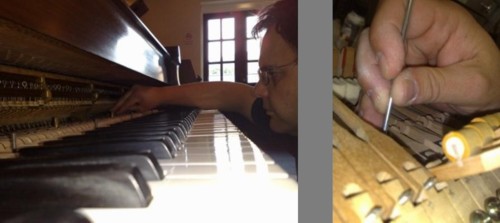
This procedure can be best described as tightening up the mechanism to reduce the slackness of the Action and to prevent early wear and tear. 99% of all new pianos are regulated and set up prior to leaving the shop; however the first couple of years the positive feel of the Action will lesson and will need to be adjusted.
Regulation of a piano would incorporate Damper regulation, Hammer blow distance, Key adjustment (side to side movement), cast/space Hammers, Lost motion, Set off, Check off, Key levelling and Depth of touch etc

